








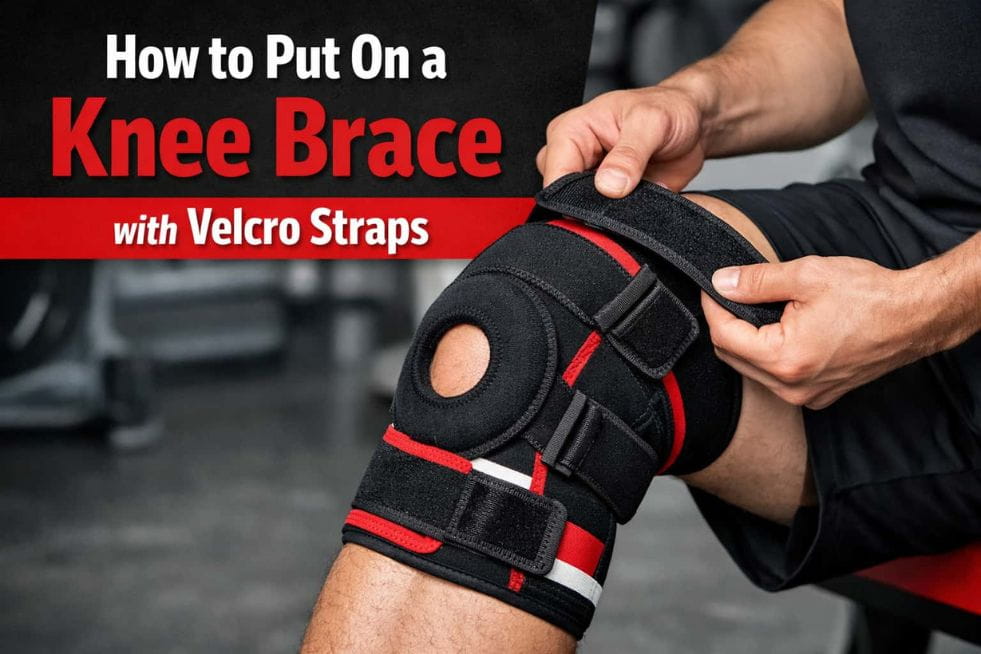
A knee brace with VELCRO® Brand straps should feel secure, comfortable, and properly positioned around the knee. The exact fit depends on the brace design, the manufacturer’s instructions, and any guidance from a healthcare provider.
For injuries, surgery recovery, arthritis, swelling, instability, or pain, follow the instructions from your clinician or the brace manufacturer. The steps below are general fit and strap-positioning tips, not medical advice.
How to Put On a Knee Brace with VELCRO® Brand Straps
| Step | What to Do | Fit Check |
|---|---|---|
| 1. Choose the right brace | Use the brace type and size recommended for your activity, fit, or support need. | The brace should match the knee, leg size, and intended use. |
| 2. Position the brace | Sit with the leg extended and place the brace so the kneecap opening or center area lines up with the knee. | The brace should sit flat without twisting, folding, or bunching. |
| 3. Fasten the straps | Secure the VELCRO® Brand straps gradually, starting near the knee joint when the brace design allows. | The brace should feel snug, not restrictive. |
| 4. Test movement | Stand, walk a few steps, and gently bend the knee if allowed by your brace instructions. | The brace should stay in place without sliding, pinching, or cutting into the skin. |
| 5. Adjust as needed | Reposition the brace or loosen and retighten the straps if the fit changes during wear. | Stop using the brace and seek guidance if there is numbness, tingling, increased pain, or circulation concern. |
Step 1: Choose the Right Brace
Before putting on a knee brace, make sure the brace type, size, and support level match the intended use. Knee braces with VELCRO® Brand straps may include wraparound braces, hinged braces, or compression-style braces with adjustable straps.
Slip-on compression sleeves, fixed-strap braces, and elastic wraps may fit differently because they do not adjust the same way as hook-and-loop strap closures.
Step 2: Position the Brace Around the Knee
Sit comfortably with the leg extended. Slide or wrap the brace around the knee so the center opening, hinge, or support area lines up with the kneecap and joint area according to the brace instructions.
The material should lie smooth against the skin or approved clothing layer. Avoid wrinkles, folds, or bunching that could create pressure points.
Step 3: Secure the VELCRO® Brand Straps
Fasten the straps gradually instead of pulling one strap as tight as possible. When the brace design allows, start with the strap closest to the knee joint, then work outward so tension is distributed evenly.
The straps should hold the brace in place without cutting off circulation. A brace that feels painful, causes tingling, leaves deep marks, or creates numbness may be too tight.
Step 4: Test Fit and Mobility
After fastening the straps, stand up and take a few careful steps. The brace should stay aligned with the knee, feel supportive, and allow the movement permitted by the brace design.
If the brace slides down, twists, pinches, or bunches, sit back down and adjust the position or strap tension. If the brace continues to slip, the size, strap condition, or brace type may not be the right fit.
Step 5: Keep the Straps Clean
Hook and loop straps can collect lint, dust, and fibers over time. When the hook side fills with debris, the closure may lose grip and the brace may slip during wear.
Use a lint roller, fine-tooth comb, or tweezers to remove debris from the hook side. Follow the brace manufacturer’s cleaning instructions, air-dry the brace when appropriate, and store it flat to help preserve the shape.
Common Fit Problems
| Problem | Possible Cause | General Fit Check |
|---|---|---|
| Brace slips down | Loose straps, incorrect size, worn hook and loop, or poor positioning. | Reposition the brace, clean the straps, and check sizing. |
| Brace feels too tight | Overtightened straps or incorrect size. | Loosen the straps and stop wearing it if numbness, tingling, or pain occurs. |
| Brace pinches or bunches | Wrinkled material, uneven strap tension, or misalignment. | Smooth the material and refasten the straps evenly. |
| Straps will not hold | Lint, debris, worn hook and loop, or damaged strap material. | Clean the hook side and replace worn strap components when needed. |
VELCRO® Brand Straps vs. Non-Adjustable Designs
Knee braces with VELCRO® Brand straps are adjustable, which can make them easier to tighten, loosen, remove, and reposition. That adjustability can be helpful when comfort changes throughout the day or during activity.
Non-adjustable slip-on sleeves and fixed designs may be quicker to put on, but they rely more heavily on precise sizing and material stretch.
When to Ask for Fit Guidance
Ask a healthcare provider, brace fitter, or manufacturer for guidance if the brace is being used after surgery, after an injury, for a diagnosed condition, or for recurring pain or swelling.
Stop wearing the brace and seek guidance if the brace causes numbness, tingling, increased pain, skin irritation, circulation concerns, or instability.
Hook and Loop Products for Brace and Strap Projects
HookandLoop.com supplies VELCRO® Brand and DuraGrip® Brand products used in straps, closures, and manufactured products across many industries. Product selection for braces or wearable items should consider comfort, skin contact, laundering, strap tension, closure strength, and the final product design.
Explore hook and loop straps, custom hook and loop straps, and medical hook and loop applications.
FAQ:
Q. How tight should a knee brace with VELCRO® Brand straps be?
A. It should feel snug enough to stay in place, but not so tight that it causes numbness, tingling, deep marks, pain, or circulation concerns. Follow the brace manufacturer’s instructions or clinician guidance.
Q. Why does my knee brace slip during activity?
A. A brace may slip because of loose straps, incorrect sizing, worn hook and loop, poor positioning, or debris in the hook side of the fastener.
Q. Should a knee brace be worn over or under clothing?
A. Follow the brace instructions. Some braces are designed to sit directly against the skin, while others may allow a thin clothing layer if it does not interfere with fit or strap grip.
Q. Can I adjust the straps after putting on the brace?
A. Yes. Adjustable hook and loop straps can be loosened or tightened during wear if the brace shifts or comfort changes.
Q. How do I clean hook and loop straps on a knee brace?
A. Remove lint and debris from the hook side with a lint roller, fine-tooth comb, or tweezers. Follow the brace manufacturer’s washing and drying instructions for the full brace.